Real bamboo, reed, and grass woven into a natural shade — texture and warmth no synthetic material replicates. Serving The Woodlands, Spring, Conroe, Kingwood, Tomball, Cypress, Magnolia, and Montgomery since 2004.
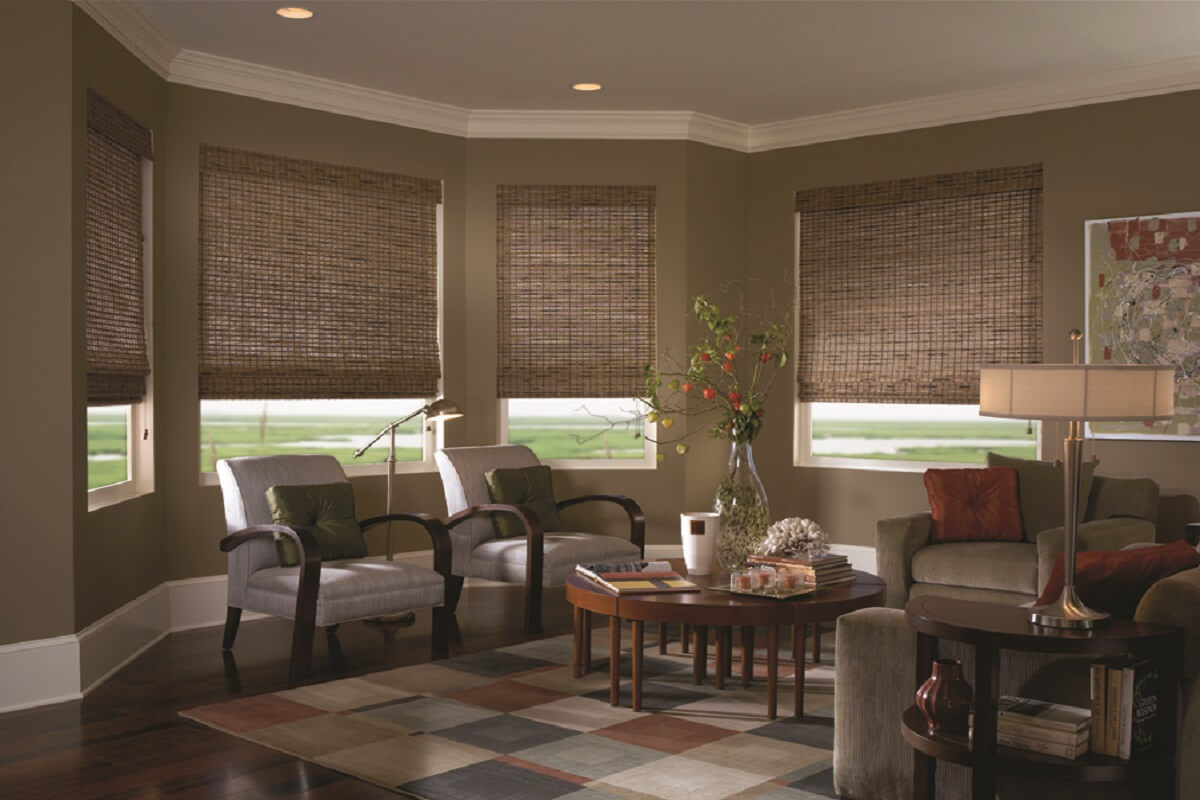
A woven wood shade is made from real plant material — bamboo slats, natural reeds, jute, or woven grasses — bound together into a textured shade that raises into folds much like a roman shade. But it's genuinely a different material category. Where a roman shade uses tailored decorator fabric, a woven wood shade is raw, natural vegetation with the grain, knots, and tonal variation of the real thing.
That's the whole appeal, and it comes with one honest tradeoff worth knowing up front before you buy.
Both fold up the same way. The material is what's different.
| Feature | Woven Wood Shades | Roman Shades |
|---|---|---|
| Material | Real bamboo, reed, jute, or grass | Tailored decorator fabric |
| Unlined privacy | Natural gaps let light and silhouettes through | Solid panel, no gaps |
| Look | Earthy, textured, organic | Soft, tailored, drapery-like |
| Moisture | Keep away from steady humidity | Low to moderate tolerance |
Bamboo is one specific material within the woven wood category. Woven wood shades also include reed, jute, and grass — bamboo is simply the most common and recognizable option.
No, and we want you to know that before you order. The natural weave has small gaps by construction. During the day this creates a nice filtered light effect, but at night with your lights on, silhouettes and light show through. A liner solves this.
Because the weave itself isn't solid. A liner is a fabric backing that fills those gaps, which is the only way to get real privacy and light control from this product.
A privacy liner diffuses light and blocks sightlines while still letting some daylight through. A blackout liner is opaque and blocks the majority of light entirely — the choice for bedrooms and media rooms.
We don't recommend it. Natural fibers absorb ambient moisture, and steady steam or humidity can warp or discolor the material over time. Faux wood blinds are the better choice for bathrooms and other high-moisture rooms.
Bamboo, natural reed, jute, and woven grasses — each with a different texture, weight, and look. We bring samples of each to your consultation so you can compare them in person.
Because it's real plant material, not a manufactured pattern. Natural variation in grain, knots, and tone is part of what you're buying — no two shades are identical.
Yes. Cordless lift removes the hanging cord entirely — the safer option with kids or pets, and standard on most of what we install.
Yes, particularly useful given natural material is heavier than synthetic fabric — motorization makes wide or hard-to-reach shades effortless to operate.
A cloth tape sewn along the side borders of the shade. It keeps the natural material from fraying over time and adds a clean, finished edge.
Dust with a feather duster or a vacuum's soft brush attachment on low suction. Don't soak it or use harsh chemical cleaners — this is a natural material, not a synthetic one built to handle that.
They fold up the same way, but a roman shade is tailored decorator fabric with no gaps, while a woven wood shade is real plant material with natural gaps in the weave. See our roman shades page for fold styles and fabric options.
You choose. Domestic production runs about three weeks at a higher price. Imported production runs about eight weeks and costs less.
A limited lifetime warranty covering manufacturer's defects in materials and lift mechanisms, for as long as you own the product.
Schedule your free in-home consultation today. We bring samples, measure every window, and give you an exact quote — no pressure, no obligation.