
Natural grain, custom stains, and a lighter lift than any faux wood blind. Serving The Woodlands, Spring, Conroe, Kingwood, Tomball, Cypress, Magnolia, and Montgomery since 2004.
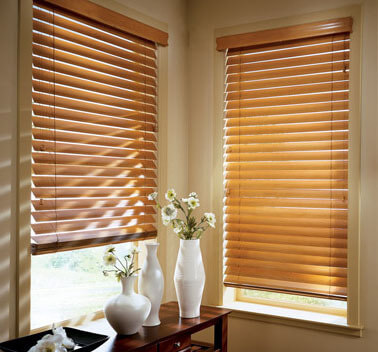
Wood blinds give you the same natural grain and stain-matching as our wood shutters, in a horizontal slat blind that raises and stacks at the top of the window instead of a fixed panel. Less expensive than shutters, and the right fit for windows where a stackable treatment makes more sense — behind furniture, on doors, or in secondary rooms.
We sell wood and faux wood blinds side by side, so we have no reason to steer you toward the pricier one. Real wood earns its place on two things: it takes a stain, and it is lighter, which means an easier lift on tall or wide windows.
| Feature | Wood Blinds | Wood Shutters | Faux Wood Blinds |
|---|---|---|---|
| Structure | Slats on a headrail, stacks up | Fixed panel, permanent | Slats on a headrail, stacks up |
| Finish | Stain or paint | Stain or paint | Paint only |
| Relative cost | Mid | Highest | Lowest |
| Moisture | Dry rooms only | Dry rooms only | Unaffected |
| Best for | Secondary windows, budget-conscious real wood look | Primary living spaces, permanent fixture | Bathrooms, kitchens, laundry |
They serve different purposes rather than one being better. Shutters are a permanent fixture built into the window opening. Blinds hang from a headrail and stack up when raised, cost less, and suit windows or budgets where a fixed panel isn't necessary.
Yes. We bring stain swatches to the in-home consultation so you can match existing wood tones in your own light before ordering.
Real wood slats weigh less than faux wood slats of the same size. Less weight means less strain on the lift cords and headrail mechanism, which matters most on tall or wide windows.
We don't recommend it. Humidity and splashing water can eventually swell the slats and affect the finish. Faux wood blinds are unaffected by moisture and are the better choice for bathrooms, kitchens, and laundry rooms.
Yes. Cordless lift raises and lowers the blind by hand at the bottom rail, with no hanging cords — safer around children and pets, and a cleaner look at the window.
2 inch is the standard proportion for most residential windows. 2.5 inch opens to a wider gap when tilted, giving more view and light, closer to the look of a shutter louver.
You choose. Domestic production runs about three weeks at a higher price. Imported production runs about eight weeks and costs less. Installation itself usually takes an hour or two once the blinds arrive.
Dust regularly with a microfiber cloth or a vacuum brush attachment. For light cleaning, wipe with a slightly damp cloth and dry immediately. Avoid soaking the slats or using harsh chemical cleaners.
Closed slats add some insulation at the glass and help reduce heat gain, though not as much as a fully closed solid shutter panel. They're a meaningful help, not a replacement for good windows.
Yes. A matching wood valance across the top hides the headrail hardware for a finished look, and we can also do decorative cloth tapes in place of standard cords if you want a more tailored appearance.
Yes, for both lift and tilt. Worth considering on tall windows or anywhere reaching a wand or cord is inconvenient.
Our limited lifetime warranty covers manufacturer's defects. If a slat warps or a lift mechanism fails under normal use, we repair or replace it at no charge, for as long as you own the product.
Schedule your free in-home consultation and see wood blind samples in your own space — in your own light.